

Enrichment & Fortification
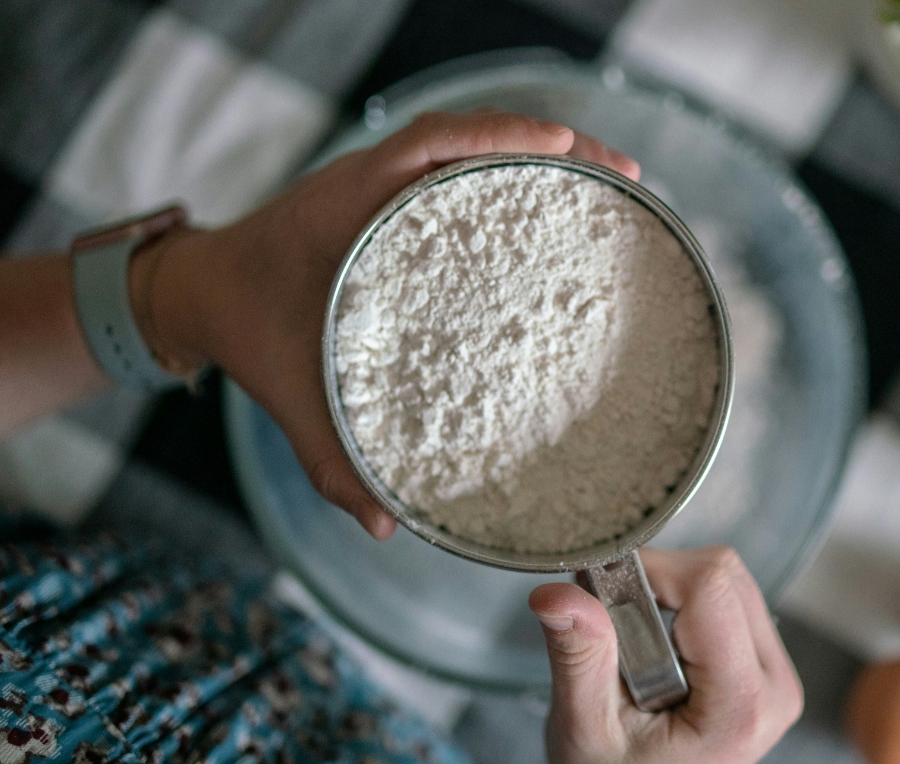
Grain foods provide important nutrients that help support overall health. Two key processes – enrichment and fortification – help ensure these foods continue to contribute to the nutrient needs of Americans.
Both approaches were developed as part of major public health efforts and remain an important part of today’s food system.
What Does “Enriched” Mean and Why It Matters
Enrichment is when nutrients that were reduced during the milling process are added back into a grain product.
When grains such as wheat are milled to make refined flour, the outer portions of the kernel, the bran and germ, are removed. This step improves shelf life and creates the texture and functionality needed for many breads, pastas and baked goods.
During milling, some nutrients are reduced. Enrichment restores key vitamins and minerals, ensuring that grain foods provide important nutrition.
Most refined wheat flour in the United States is enriched. Many familiar foods, including breads, cereals, tortillas and pasta, are made using enriched grains, sometimes alongside whole grains. Because grain foods are widely consumed, affordable and shelf-stable, they’re an effective way to help deliver essential nutrients to large populations.
Typical nutrients added back through enrichment include:
Iron
Thiamin (Vitamin B1)
Riboflavin (Vitamin B2)
Niacin (Vitamin B3)

What is Grain Fortification?
Fortification is the process of adding nutrients not naturally found in a food to meet a specific health need.
One well-known example is the addition of folic acid to enriched grain products. In 1998, the U.S. Food and Drug Administration (FDA) required that enriched wheat products be fortified with folic acid as a way to help prevent neural tube defects – serious birth defects of the brain and spine that develop very early in pregnancy. Folic acid must be consumed before pregnancy and during the first few weeks to be effective. While many women take prenatal vitamins containing folic acid, they often start after learning they are pregnant, which may be too late to fully prevent these defects. Mandatory folic acid fortification is considered one of the most successful fortification programs to date and has contributed to roughly a 35% reduction in neural tube defects since implementation.
Food intake data also show that people get more folic acid from grain foods than from vegetables, and grain fortification has helped children meet important nutrient needs.
Additionally, research suggests that removing enriched grains entirely from the diet could have unintended consequences. Modeling studies show that if only whole grains were consumed, without enriched grains or substitutions, people could be at risk for nutritional deficiencies, as whole grains alone may not replace the nutrients provided through enrichment and fortification.
History of Enrichment & Fortification
In the early 1900s, the United States faced widespread nutrient deficiency diseases. Pellagra, caused by a lack of niacin, was among the leading causes of death in parts of the country, while other B-vitamin deficiencies, such as beriberi (thiamin) and riboflavin deficiency, also posed major public health challenges.
In response, scientists and public health leaders introduced enrichment of refined grains in the late 1930s and early 1940s, adding back key nutrients like B vitamins and iron to staple foods such as flour and bread. Because grain foods are widely consumed, this approach proved highly effective. Within a few decades, pellagra was virtually eradicated and other major deficiency diseases became extremely rare.
Decades later, fortification efforts continued to evolve, including the addition of folic acid to enriched grain products in 1998 to help reduce neural tube defects.
Today, enriched grain foods remain an important source of key nutrients, including iron and several B vitamins, and continue to play a role in helping Americans meet their nutritional needs.
THE ROAD TO ENRICHMENT & FORTIFICATION IN THE U.S
Early 1900s
Pellagra was prevalent in the U.S.
Late 1930s
Bakers voluntarily add vitamins to flour
1939
American Medical Association (AMA) Council on Foods and Nutrition encourages enrichment of grain products
1940
Food & Drug Administration (FDA) adopts the term “enriched”
1941
The Food and Nutrition Board encourages enrichment of flour and bread
1942
U.S. Enrichment Act mandates adding B vitamins and iron to enriched grain products
1998
FDA requires enriched grain products to be fortified with folic acid