

Are you following outdated health advice? We’re debunking the top 5 nutrition myths with science-backed facts from registered dietitians to help you eat smarter.
In an era of viral wellness trends and “influencer” advice, it’s hard to distinguish between sound science and marketing myths. To help clear the air, we’ve gathered 5 nutritional misconceptions often addressed by Registered Dietitians (RDs).
Here is the truth behind the myths that might be holding your health back.
Myth 1: All Food is Either “Good” or “Bad”
Life doesn’t fall perfectly into shades of black and white, and neither does food. If all food was either 100% healthy or unhealthy, solving the obesity epidemic would be straight forward. Registered dietitian and nationally recognized food and nutrition expert, Elana Natker, sets the record straight.
“It drives me nuts when I hear people talk about good and bad foods. No one food is perfect, and no one food will kill you on the spot (unless, of course, it’s legitimately poisonous),” says Natker. “It’s the overall pattern of the way we eat and our lifestyle (getting regular exercise, not smoking) that contributes to whether we’re healthy or not. Heck, even drinking too much water can send you to the hospital!”
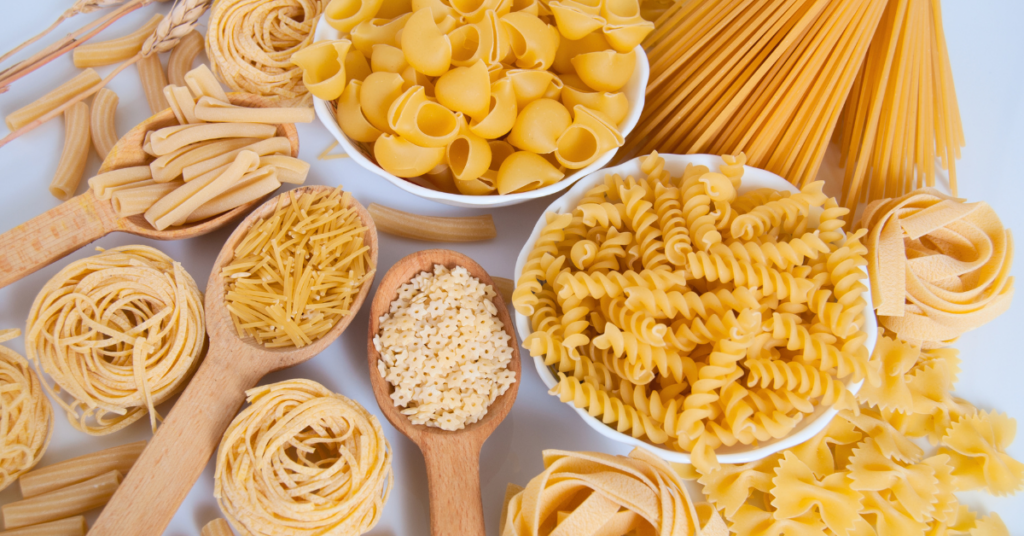
Natker continues, “this type of good/bad language tends to morph into a value judgment on oneself. Too quickly it goes from this food is bad to I am bad, or I’m so good because I avoided [XYZ] food. It’s true that all foods really do fit within an overall healthy diet. Go ahead and enjoy that plate of pasta or have that dessert, and enjoy every bite. Be sure you’re getting all your fruits, vegetables and calcium-rich foods too. Our bodies are complex machines, and it takes a variety of foods to run this system well.”

Myth 2: Carbs Make You Fat
Most fad diets say to avoid carbohydrates like the plague. There is a misconception that we don’t need them in our diet, when the reality is that your body needs that balance. Charlotte Martin, registered dietitian and author of The Plant-Forward Solution, explains:
“The decades-long low-carb fad diet craze has made carbohydrate-rich foods public enemy number one. The more recent popularity of a very low-carb, very high-fat diets like keto has only furthered the carb controversy, turning people into carbophobes,” says Martin. “Put simply, the theory suggests that carbohydrates are uniquely fattening because they are the primary driver of insulin, which promotes fat gain and — the theory goes — makes you hungrier, too. But if carbs are inherently fattening and drive appetite, wouldn’t we expect to see significantly greater fat loss from low-carb diets? We don’t. Tightly controlled studies in which calories and protein were held constant have upheld that low-carb diets offer no fat loss advantage over higher-carb ones.”
Worry not — carbs are our friend, not foe! To be clear, that doesn’t mean you should treat all carbohydrate-rich food sources the same. By focusing on carb quality, you can stress less over carb quantity. The quality, carbohydrate-rich foods you want to choose most of the time have little to no added sugar and retain their fiber (and may even be a good source of protein), which helps slow digestion and the release of glucose into the bloodstream. Think whole grains, legumes, starchy veggies and fruit!
Myth 3: Gluten Free is Healthier than Wheat Products
Pam Cureton, a registered dietitian specializing in celiac disease, shared crucial insight on why non-celiac individuals shouldn’t go gluten free.
“Gluten is the protein in wheat, rye and barley. For people diagnosed celiac disease or other gluten related disorders, the gluten free diet (GFD) is essential for good health. Currently the only treatment for celiac disease is a strict gluten free diet. For those following a GFD, careful planning is important to avoid missing nutrients found in wheat products,” says Cureton. “Several studies have looked at the nutritional composition of gluten free products. The B vitamins, folate, iron and dietary fiber are low as most gluten free products are not enriched or fortified with these vitamins and minerals.”
Cureton continues, “refined wheat-based foods are enriched or fortified with iron, thiamin, niacin, riboflavin, folate (this is particularly important for women who are or are capable of becoming pregnant, as folic acid fortification in the United States has been successful in reducing the incidence of neural tube defects during fetal development). Wheat contains fructo-type resistant starches that may help create healthy and beneficial gut bacteria. The gluten in wheat may reduce serum triglyceride levels, uric acid and LDL cholesterol. Wheat also has a positive effect on blood pressure.”
Myth 4: High Glycemic Foods Increase Your Risk of Obesity
According to Professor Glenn Gaesser, who recently led a study showing the health benefits of a Monty Python walk, sometimes you deserve the chance to enjoy life and not feel shame. Gaesser shares why glycemic foods aren’t going to make you obese.
“It is widely believed that high glycemic foods made from refined grains, are fattening and increase risk for obesity. But a 2021 review in Advances in Nutrition found very little evidence to support this popular view,” says Gaessar.
Data from nearly 2 million participants showed that most studies found no relationship between dietary glycemic index (GI) and body weight. Even more noteworthy, the study found that low GI diets were generally no better than high GI diets for reducing body weight or body fat. The review concluded that there were scant scientific evidence that low GI diets are superior to high GI diets for weight loss and obesity prevention.
Myth 5: Refined Carbohydrates are Bad for Your Health
Refined grains are often labeled as “empty calories.” Recent research by Gaesser suggests they are frequently “guilty by association” due to their inclusion in unhealthy dietary patterns alongside high-sugar and high-fat foods. When staple refined grains, like bread, rice and pasta, are evaluated independently of indulgent sweets, meta-analyses show no consistent link to heart disease, type 2 diabetes or obesity. In fact, enjoying up to 6-7 servings of staple grains daily fits does not increase chronic disease risk.
Refined grains serve as a vital “supporting cast” in the American diet by delivering essential shortfall nutrients. Most are enriched and fortified, making them the primary source of folic acid and provide significant amounts of iron, B vitamins and even dietary fiber.
“Grain foods contribute 55% of all fiber in the American diet and 40% of fiber intake comes from refined grains,” says Gaesser. Eliminating refined grains could inadvertently create dangerous nutritional gaps. Instead, a balance of both whole and enriched grains is the most sustainable path to total wellness.
At the end of the day, what we eat becomes part of who we are. We need to strike a balance that allows us to eat the foods we love in portions that let us manage a healthy lifestyle. With so many people suffering from diseases caused by poor nutrition, there’s no reason to figure out that balance ourselves or let a fad diet force us to create bad habits. Listen to medical experts and registered dietitians. Let them help you find the balance of eating that lets you be the real you.